Part 2: Vivid Faces
Silver screens, large and small

Whatever Happened to Mary Kry?
Reviewed here
The Outer Limits: “Don’t Open Till Doomsday”
Aired January 20, 1964
Fair warning: You won’t find here a comprehensive look at all 49 episodes of the television series The Outer Limits (1963–1965). In fact, I am only going to write about one: “Don’t Open Till Doomsday.”
Most of The Outer Limits episodes featured the now-famous cold open voiceover:
There is nothing wrong with your television set. Do not attempt to adjust the picture. We are controlling transmission. If we wish to make it louder, we will bring up the volume. If we wish to make it softer, we will tune it to a whisper. We will control the horizontal. We will control the vertical. We can roll the image, make it flutter. We can change the focus to a soft blur, or sharpen it to crystal clarity. For the next hour, sit quietly and we will control all that you see and hear. We repeat: There is nothing wrong with your television set. You are about to participate in a great adventure. You are about to experience the awe and mystery which reaches from the inner mind to…The Outer Limits.
“Don’t Open Till Doomsday” caught my eye because it stars Miriam Hopkins as Mary Kry, an “aging flapper” who has been fluttering around her decaying mansion since her husband disappeared on their wedding day. Hopkins had a long career in Hollywood working alongside a number of famous co-stars; her star might not have been as bright as, say, that of Bette Davis, with whom she had an intense rivalry, but getting her for an episode of Outer Limits must still have been a coup.
At first, Miss Hopkins’s Mary Kry made me think of Dickens’s Miss Havisham, literature’s most famous jilted bride, now quite old, presiding over a rat-infested wedding banquet in a moldering dress. About the only quality they share is insanity, Miss Kry’s due to a serious case of intergalactic interference. In a flashback, we see Kry’s new husband on his wedding day go to the bedroom to change before he and Mary skip out on the post-nuptial party. Instantly, he is transfixed by a wedding gift on a table heavily laden with packages. A deep hum emanates from one box which has a flickering lens in its side. The groom is caught by the light and zapped inside, the prisoner of a small, one-eyed monster who resembles (to keep things G-rated) a mound of Tootsie Roll.
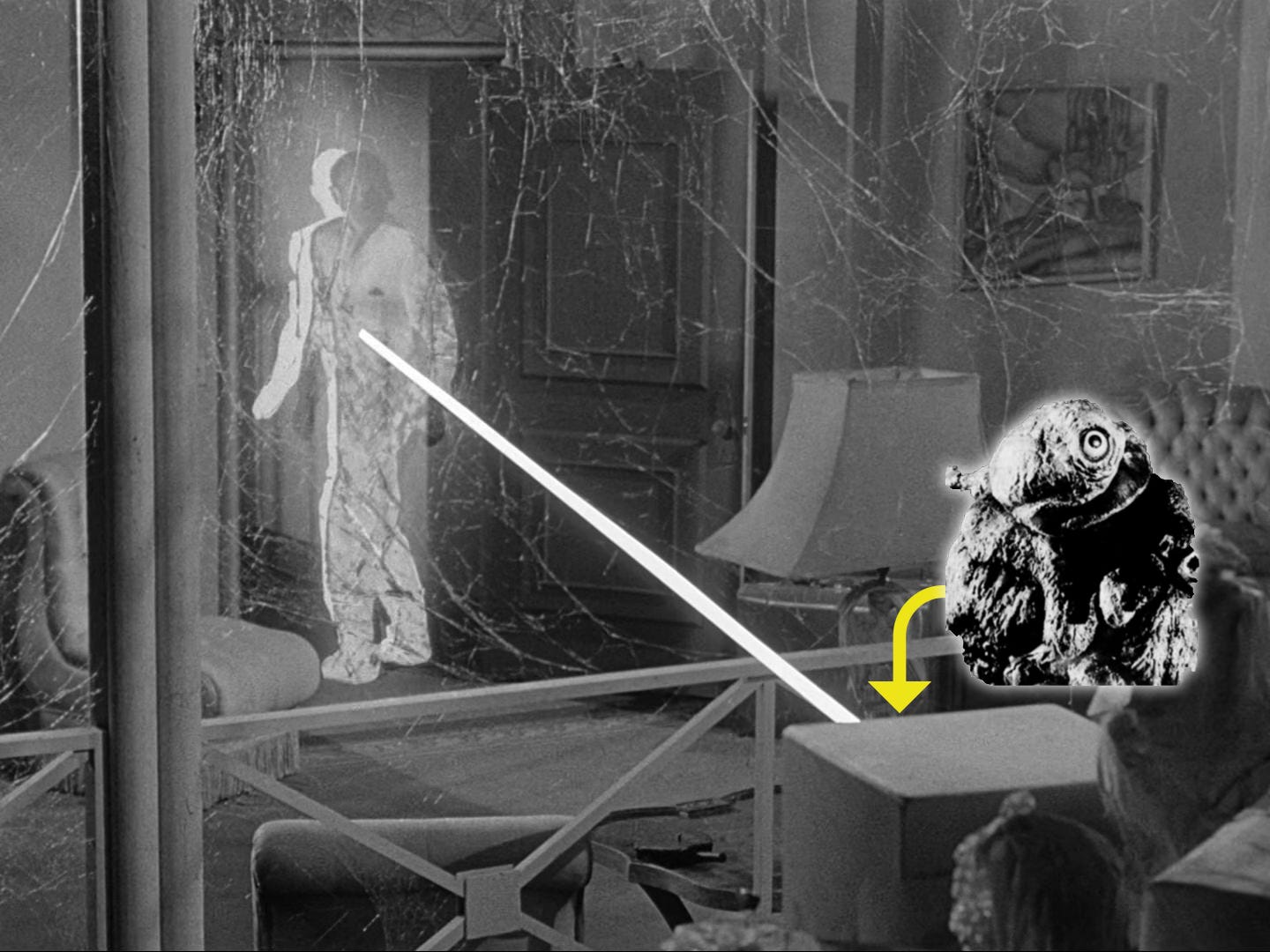
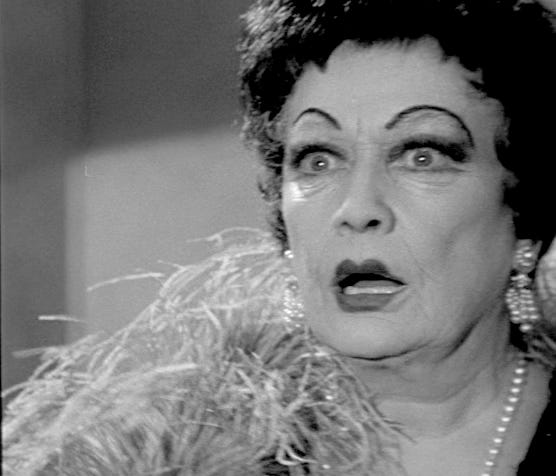
Fast forward 35 years to the newlyweds Gard and Vivia who are looking for a hotel and directed by a creepy Justice of the Peace to the Kry mansion and its bridal suite. Gard and Vivia arrive at the decrepit mansion and are welcomed by Miss Hopkins in black sequins and boa, her face wreathed in fright makeup. She simpers and skips all the way up to the bridal suite where the cobwebs are thick and the wedding presents remain unopened—including that humming box.
Miss Hopkins, like so many aging stars from Hollywood’s golden era, found herself playing the grotesque in movies and television shows that capitalized on Americans’ growing interest in the horror genre. (Hopkins had an early brush with horror playing a prostitute in Dr. Jekyll and Mr. Hyde from 1931.) The finest example is undoubtedly the 1962 movie Whatever Happened to Baby Jane? in which Bette Davis played Jane Hudson, a former child star who terrorizes her sister Blanche, played by Joan Crawford. In that movie, Davis stalks through her scenes, issuing orders in a raspy voice, dressed in shabby wigs and dresses that mimic her look as a child star, and wearing truly horrific makeup—thick white pancake, heavy eyeliner, and garish red lipstick. (Davis designed Baby Jane’s look and was well known for her willingness to appear unattractive, as she did in other roles such as the former beauty ravaged by diphtheria in Mr. Skeffington and when she shaved her hairline for The Private Lives of Elizabeth and Essex, see below.) Crawford, who made her career as a perfectly dressed star, onscreen and off, plays Blanche with quiet, injured dignity in dowdy dresses and naturalistic makeup. Sadly, this would not be Crawford’s last role in a horror film.


In The Outer Limits, Hopkins is clearly imitating Davis’s Baby Jane Hudson, but she is out of her depth. Never a strong actress, Hopkins can’t quite nail down her characterization. Granted, she is supposed to be insane, but her accent slides all over the place, her body language is loose and spasmodic, and her features are immobilized by the heavy makeup. Instead of commanding our attention with an admixture of confidence, technique, and fierce determination—as only Bette Davis could—Hopkins seems ill-at-ease and reluctant.
Of course, this is television in the 1960s so we mustn’t apply moviemaking standards to an industry still in its early days. What The Outer Limits does have is an odd staying power with its expressionistic camera work and unabashed willingness to mix genres in the name of horror. The one-eyed monster in the box (model kits available!), it turns out, is trapped between dimensions, having lost contact with its companions. Its roving eye and hypnotic hum eventually draw in Gard and Vivia as well as Vivia’s father—how has Mary Kry managed to escape? As the Box Demon explains its interdimensional mishap, we find ourselves feeling sorry for the little fellow, in spite of the rather unpleasant sight of that rolling eye and robotic arm stump. (This from a viewer who just finished Season 5 of Stranger Things. Better than expected. Gross-out factor: 9.5)
The narrator of this episode sets up the story with a portentous definition of evil—“The greatness of evil lies in its awful accuracy. Without that deadly talent for being in the right place at the right time, evil must suffer defeat. For unlike its opposite, good, evil is allowed no human failings, no miscalculations. Evil must be perfect, or depend upon the imperfections of others.” (Could this be the precursor of the pseudo-preaching found, for example, in the tiresome speeches of The Oracle in The Matrix movies?) The introduction does indeed seem a bit heavy-handed as the opening gambit for a small screen sci-fi sketch. But, as fans of early television science fiction know, series such as The Outer Limits, Twilight Zone, and Star Trek call on us to respect the show and accept it within, well, its limits.
They Were Giants
Reviewed here
An Empire of Their Own: How the Jews Invented Hollywood
Neal Gabler
New York: Anchor/Random House, 1988.
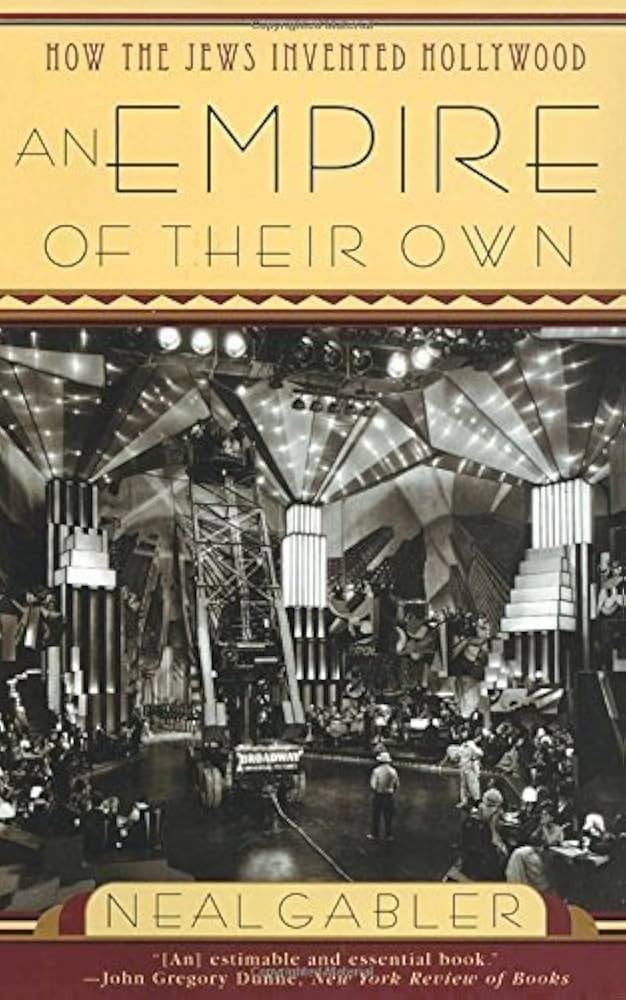
Neal Gabler’s 1988 account of the origins of Hollywood stands as a definitive account of how a handful of entrepreneurs arrived in a dusty Southern California village in the early 1900s and transformed its shacks and bumpkins into movie palaces and movie stars. Virtually every Hollywood production studio was established by a Jew of Eastern European origin who hailed from New York or the Midwest: Adolph Zukor and Paramount, Harry Cohn and Columbia, Carl Laemmle of Universal, Jesse Lasky and his players, and the grand patriarch of them all, Louis B. Mayer of MGM. Each arrived in California at various times from about 1900 to just before the Great Depression. They came with backgrounds as fur salesmen, wholesalers, and bookkeepers, and progressed to running or owning nickelodeons and automated vaudevilles that they turned into movie houses showing one-reelers. In a few short years, an elaborate system evolved that covered film rentals, distribution networks, rights arrangements, and percentage agreements. For the public, the novelty of projected images, even if it was nothing more than a couple flirting or firemen entering a burning building, was electrifying. People were willing to spend pennies a day to be entertained and a small but canny group coalesced in Hollywood to ensure that that entertainment would grow into the thrilling escapist movies we all know so well.


However, Gabler’s book is more than a chronicle of the chaotic early days of Hollywood. As its title suggests, the movies became a means for the Jewish studio heads, their associates, and their families to become Americans. Assimilation was not a dirty word but an imperative for them. In California, although they did not entirely escape antisemitism, being Jewish was less a defining trait—one the Jews themselves sought to obliterate or at least sublimate, according to Gabler—than a tacit binding agent that might or might not hold. The movie moguls invented Hollywood so they could reinvent themselves. The movies enabled them to live as they had seen Eastern aristocrats live with the best cars, the best houses, the best clothes, the schools for their children. They accepted the all-consuming nature of the movies because in the studios they had complete control. “The studios were repositories of dreams and hopes, security and power,” Gabler writes. “If one couldn’t control the world of real power and influence, the august world of big business, finance, and politics, through the studio, one could create a whole fictive universe one could control.… What gave each studio its distinctive personality was an elaborate calculus of economic circumstance, the location of its theaters, tradition, geography, and a hundred other things, but most of all it was a product of the personality of the man or men who owned and ran it. The moguls made the studio in their images to actualize their own dreams.”
In spite of their control of the industry and the power they held, sorting still went on. The German Jews who had already established themselves in California—working in medicine, law, or banking—looked down on the Eastern European Jews of the movie industry. Unable to join their country clubs or social groups—doubly blackballed by so-called “clean Jews” and gentiles—Mayer, Jack and Harry Warner, Zukor and their peers started their own, carving, for example, Hillcrest Country Club out of 142 desolate acres in Beverly Hill.
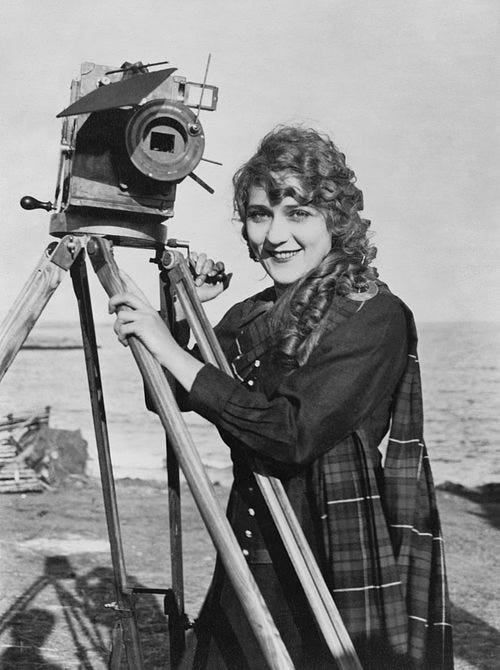
Gabler’s nimble narrative is propelled by the dynamic personalities of early Hollywood. Harry Cohn, “profane, vulgar, cruel, rapacious, philandering” is one of the most memorable, working his way up from trolley conductor to head of Columbia. So unlettered was Cohn that he couldn’t even correctly spell the name of his own studio but few dared buck the man who said “I don’t get ulcers, I give ’em.” Carl Laemmle was avuncular and kind, Mayer priggish and paternalistic. Gabler’s section on producer Irving Thalberg, a mythical producer figure who blazed up like a rocket and died at 37 from a congenital heart defect, is enlightening and brings the “prince” back to earth.
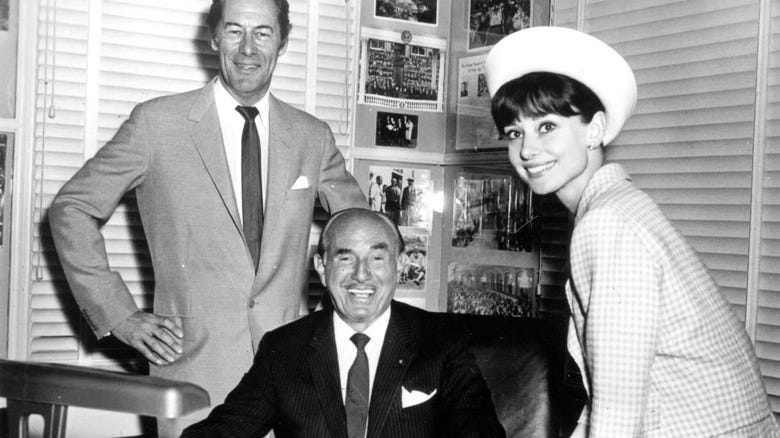
The chapter “Rabbi to the Stars” profiles the two leading religious leaders of Hollywood, men different in background and temperament but essential to understanding Jewish culture and the movie industry. Born in San Francisco, Edgar Magnin, brought theatrical enthusiasm to the Wilshire Boulevard Temple where the congregation was composed of A-list industry types, most of whom “demonstrated…that making movies was a deeper obligation than religion.” Temple Israel, led by Max Nussbaum, was more conservative not least because Nussbaum had experienced Hitler’s depredations first-hand when his Berlin temple went up in flames during Kristallnacht. Nussbaum managed to save a small Torah scroll that he preserved during his escape from Europe and, when he became rabbi of Hollywood’s Temple Israel, he placed the scroll in the temple ark, a perpetual witness of the events in Germany. Inevitably, Magnin and Nussbaum became rivals: “Magnin in the pulpit had bonhomie; Nussbaum had charisma. Magnin had the authority of one who passed with the gentiles; Nussbaum had the moral authority of one who challenged them.”


As the founders aged and died—except the indestructible Adolph Zukor who lived to 103—a rift between old Hollywood and new Hollywood opened. Exacerbating the fissures were legal battles and boardroom shenanigans, growing communist activity (those writers!), and the volatile collision of wartime fever and paranoia, one offshoot of which was the House Committee on Un-American Activities with its overheated atmosphere of suspicion and fear. Gabler points out that the Hollywood Jews under the HUAC spotlight found themselves in a no-win situation. While the Hollywood executives were staunchly anti-Communist, they also recognized “HUAC’s anti-Semitic bent and realized that the tautology of Jew and Communist would ultimately destroy not only the Hollywood Reds, but the executives themselves.” Hollywood in the late 1940s and early 1950s spawned scores of watchdog committees, leagues, and blacklists. Louis B. Mayer’s dream of the movies as the means of Jewish idealization and gentility faced the harsh reality of politics; the miracle is that so many classic movies were still coming out of Hollywood.
“[W]hat the Hollywood Jews left behind is something powerful and mysterious,” observes Gabler in his epilogue. “What remains is a spell, a landscape of the mind, a constellation of values, attitudes, and images, a history and a mythology that is part of our culture and our consciousness. What remains in the America of our imaginations and theirs. Out of their desperation and their dreams, they gave us this America. Out of their desperation and dreams, they lost themselves.”