
Beatle with a Camera
Paul McCartney’s Photographs at the Frist Museum

My favorite high school graduation gift was a Pentax 35mm camera. It was hefty and came with a strap, a case, and two lenses. Popping open the back of the camera and loading a new roll of film was a tricky operation. That Pentax felt like a real piece of equipment full of the promise of Good Photographs.
Eyes of the Storm: Paul McCartney Photographs, 1963–64 showcases a selection of nearly 1,000 recently discovered photographs taken by Paul McCartney with his Pentax during the period in which the Beatles went from being aspiring musicians in Liverpool to white-hot international celebrities. Before Beatlemania took the world by storm, McCartney recorded candid portraits of bandmates George Harrison, Ringo Starr, and John Lennon as they began performing with other acts before moving on to Paris. It wasn’t the first trip to Paris: In 1961, McCartney and Lennon arrived as hitchhikers, dazzled by monuments and boulevards and taking in a concert by Johnny Hallyday, France’s answer to Elvis Presley.
But by the time they returned to Paris as the Beatles in January 1964, things had improved, so much so that they stayed at the luxurious Hotel George V and played three sets a day at the Olympia Theatre, juggling photo shoots and recording sessions. One standout image from this period is a shot of two musicians at the Pathé Marconi Studios where the Beatles recorded German language versions of “I Want to Hold Your Hand” and “She Loves You” for release in West Germany. (Note: All photographs appearing in this post were taken at the exhibition so I ask the reader’s indulgence for awkward crops and distortion.)
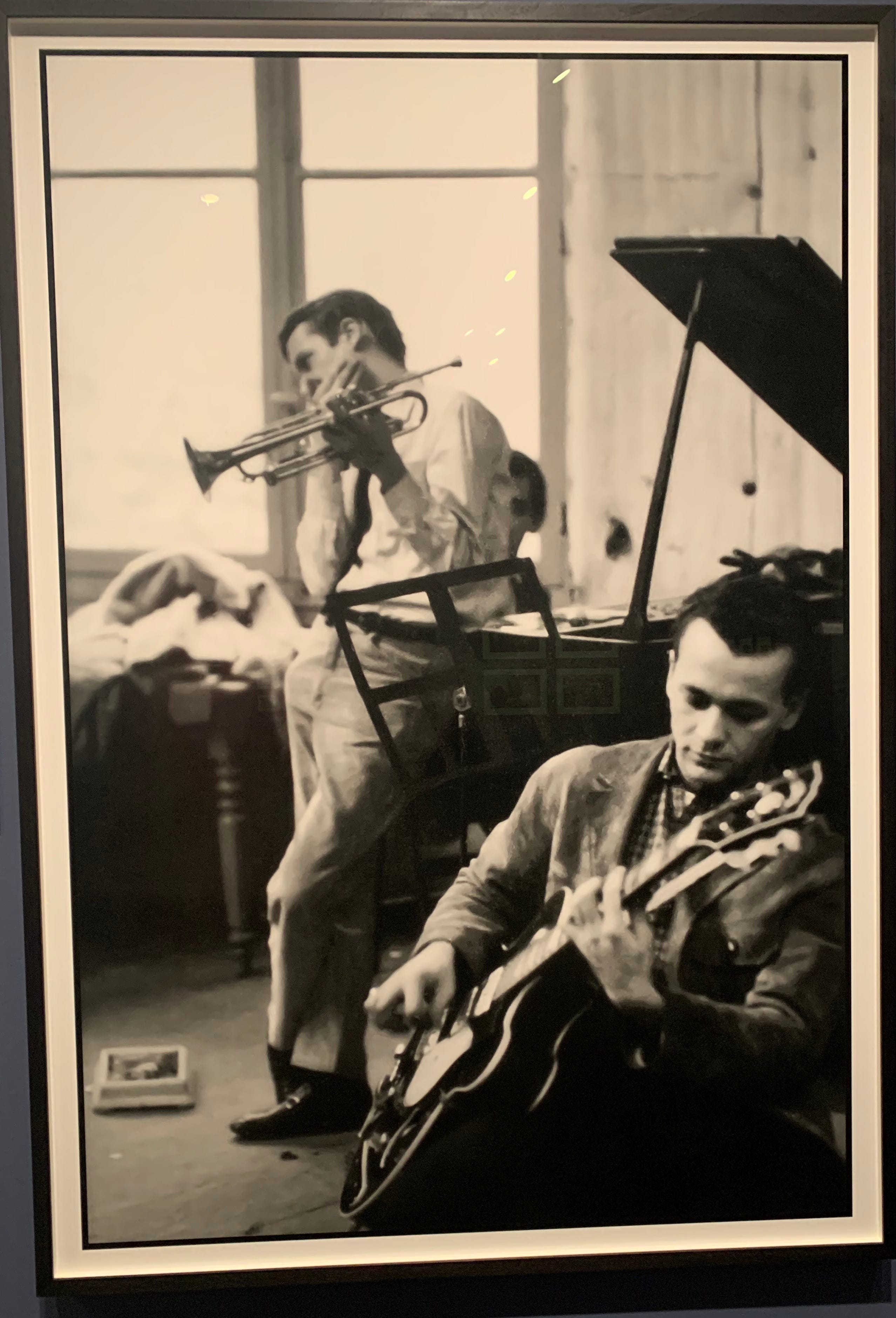
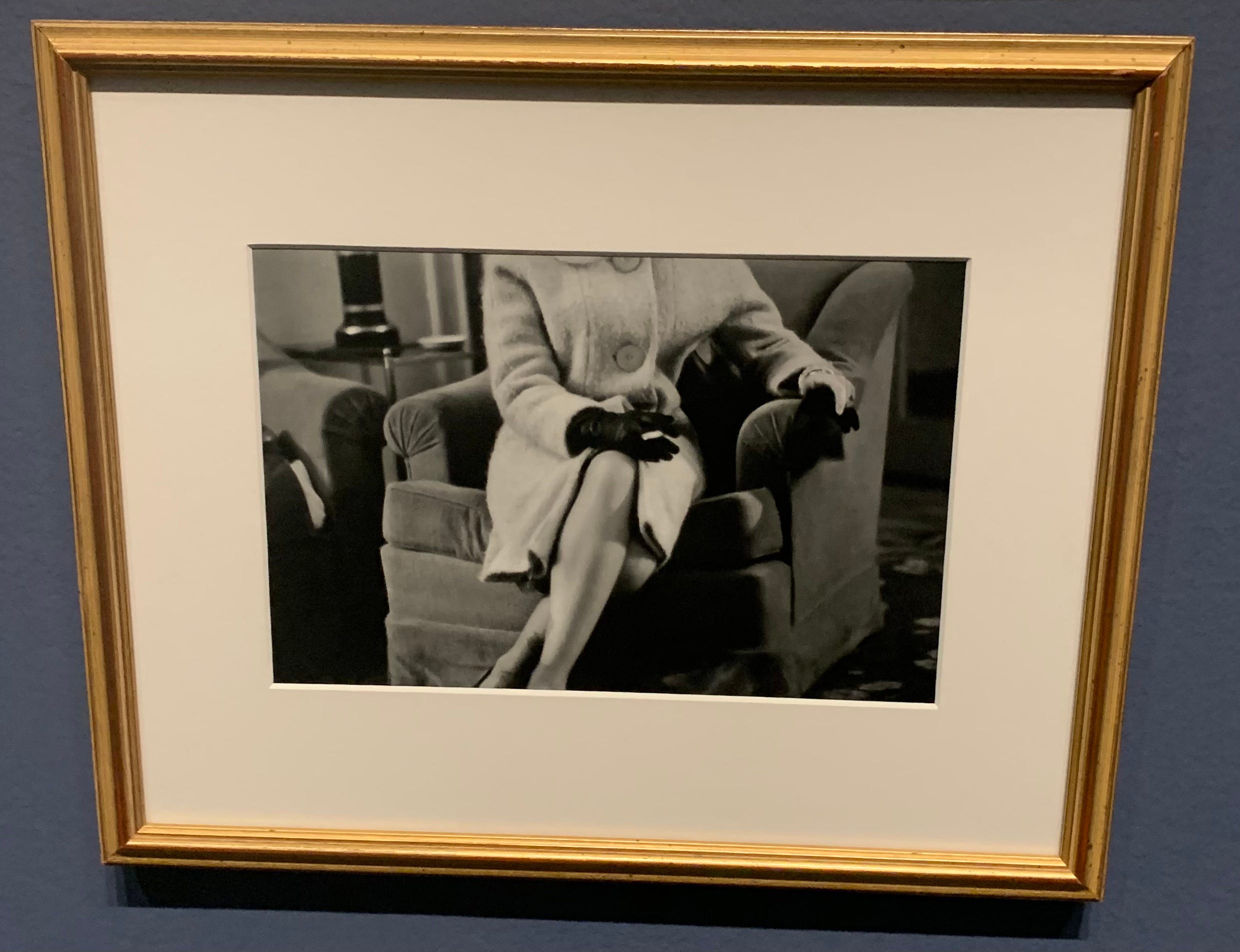
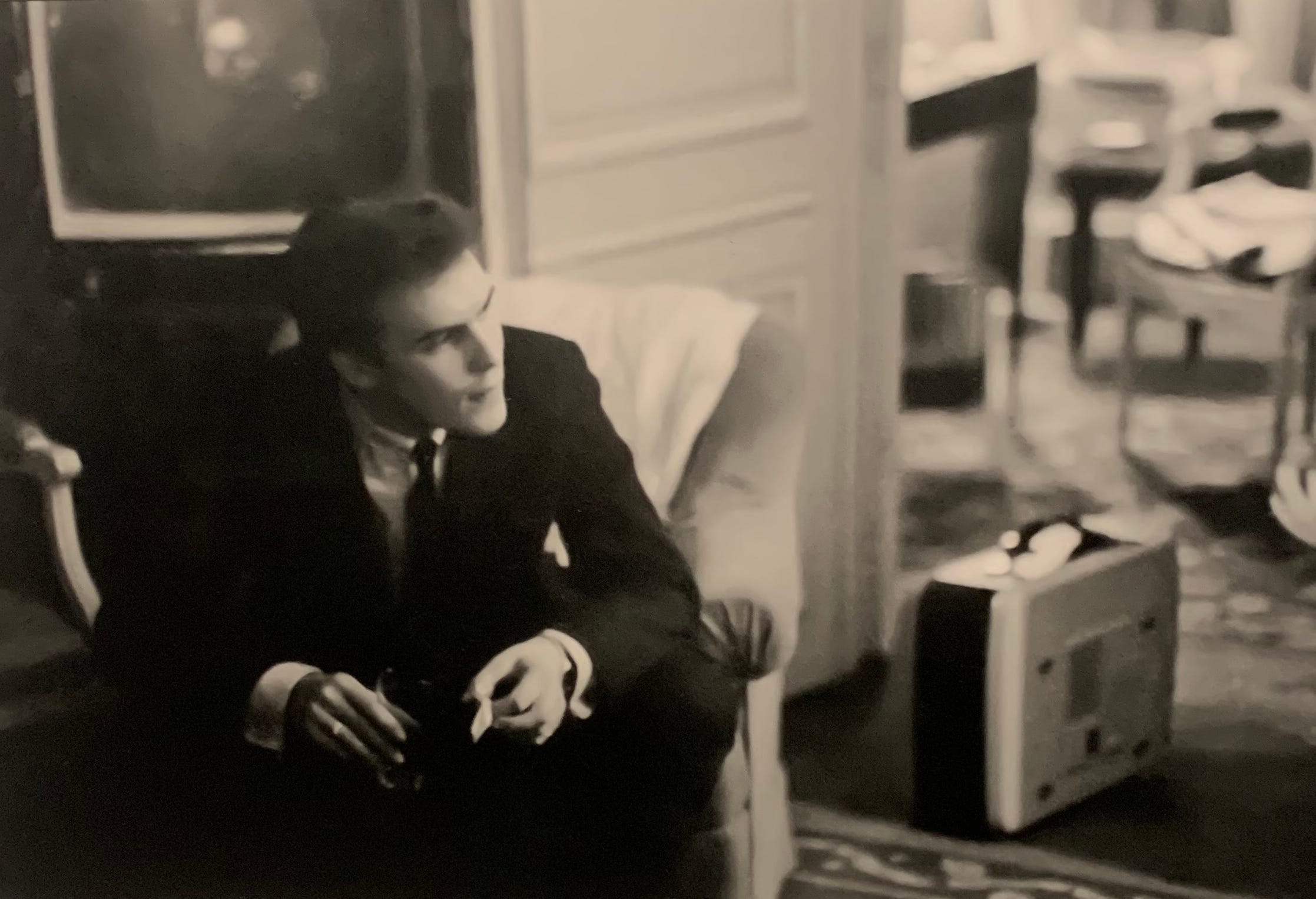
By this time, McCartney is beginning to get a feel for how to photograph action. He is also testing out new composition ideas. One of his most intriguing shots is that of a woman seen only from shoulders to ankles, legs crossed, in a George V lobby armchair, wearing a trapeze coat, a cigarette in her gloved right hand. She is unidentified but looks entirely Parisian. There is also a fine unposed shot of steely-eyed manager Neil Aspinall in a hotel chair pondering some point of logistics, no doubt, a blocky tape deck next to him—a cool customer in the midst of chaos.
During their stay in Paris, McCartney recalls telling his bandmates:
‘I don’t think we should go to America until we’ve got a number one hit.’ So we waited, and we happened to be in the George V hotel in Paris when the telegram arrived from Capitol Records in America. We just screamed and jumped on each other and ran around the hotel room and danced. It was a lot of fun.
The Beatles arrived in America in February 1964 while “I Want to Hold Your Hand” was number one on the charts. McCartney captured the moment of their arrival at JFK with a series of images of the tarmac and terminal roof lined with photographers, fans, airport workers, and baggage handlers with their fingers in their ears. Between the sound of plane engines and the screaming fans, the noise level must have been deafening. As the band drove into Manhattan to rooms at the Plaza, crowds chased them through the streets and gawkers clogged the sidewalks. McCartney took several outstanding shots of the crowd, unfazed by having to take pictures through car windows or while in motion.
By this point in the exhibition, we can hear the video clip of the Beatles’ February 9, 1964 performance on the Ed Sullivan Show. Some 73 million people saw this broadcast, television viewers and radio listeners having been primed for days with splashy feature stories and nonstop airplay. The group played before a studio audience of squealing girls on a set that looked like an exploded orange and their unusual (for the time) line-up of three guitarists backed by the drums still comes as a surprise. They first played “All My Loving,” then the Music Man ballad “Till There Was You” during which their names were superimposed over each man. When Lennon appeared, the screen read “John. Sorry girls, he’s married.” That segment ended with the rollicking “She Loves You.” The second Sullivan segment included performances of “I Saw Her Standing There” and (finally) the number one hit “I Want to Hold Your Hand.” (For the full story on how Ed Sullivan learned about The Beatles and their appearances on his show, visit the ridiculously informative Internet Beatles Album.)
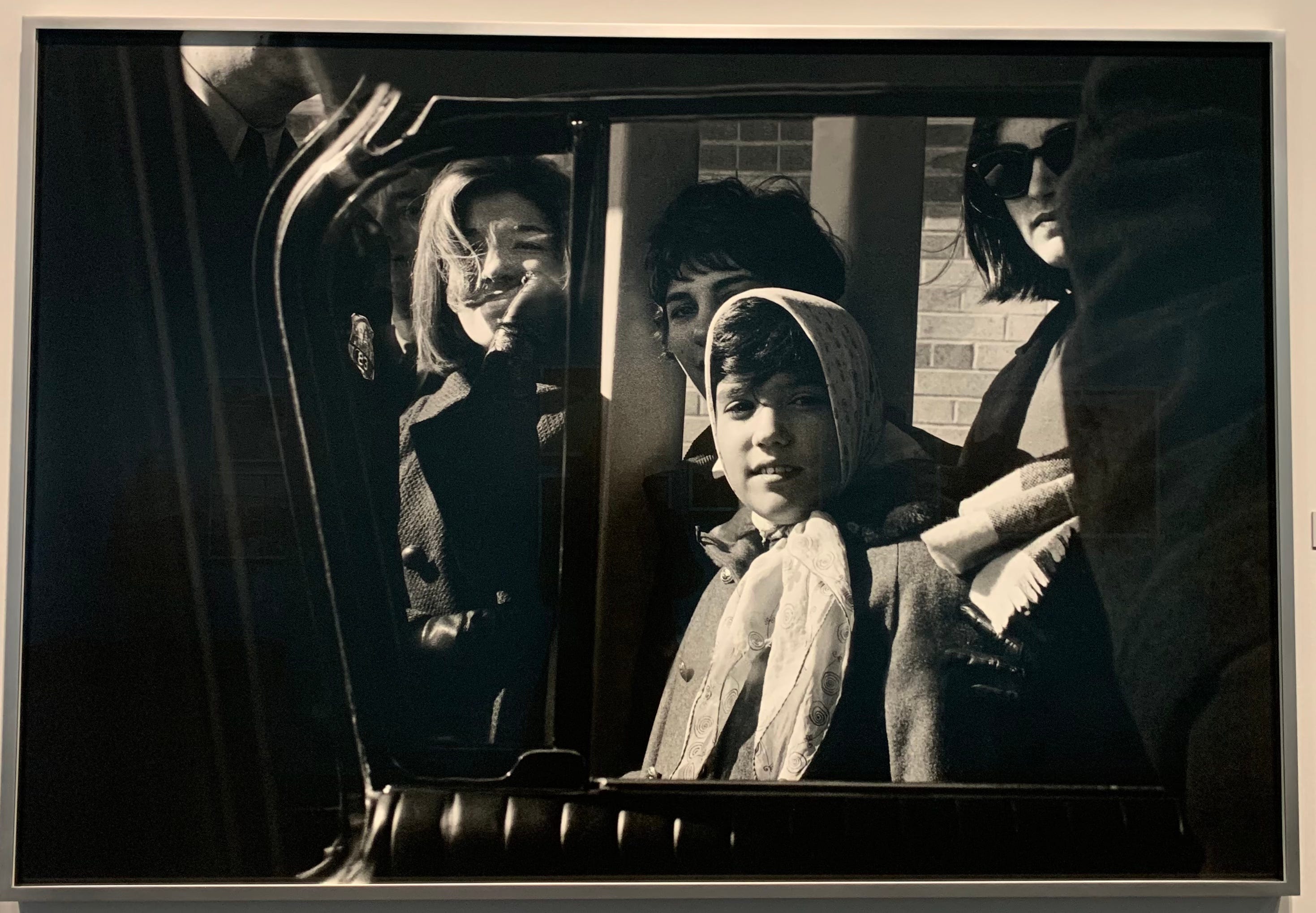
McCartney’s photographs from their American tour chronicle celebrity from the viewpoint of the celebrity. Because there wouldn’t be celebrity without fans, McCartney often turns the camera on everyday people. In some images, it is clear that some of these people don’t even know who the Beatles are—the uniformed waitresses behind the restaurant window, the cop on the beat, the weary man in the fedora. They don’t know and they don’t care. Others want to be astonished, their faces open and curious—as in one of McCartney’s favorite images, a young girl wearing a scarf seen through a car window.
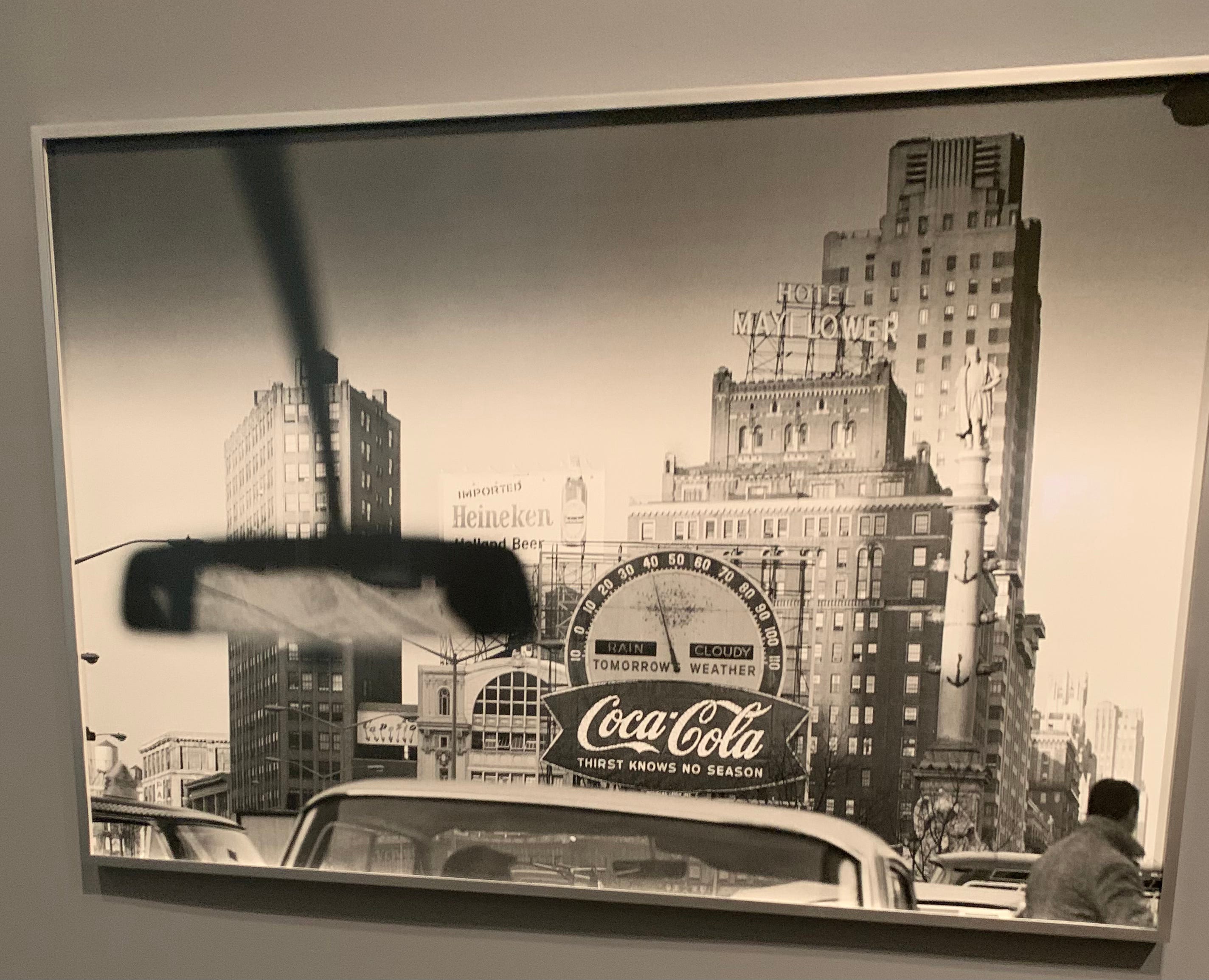
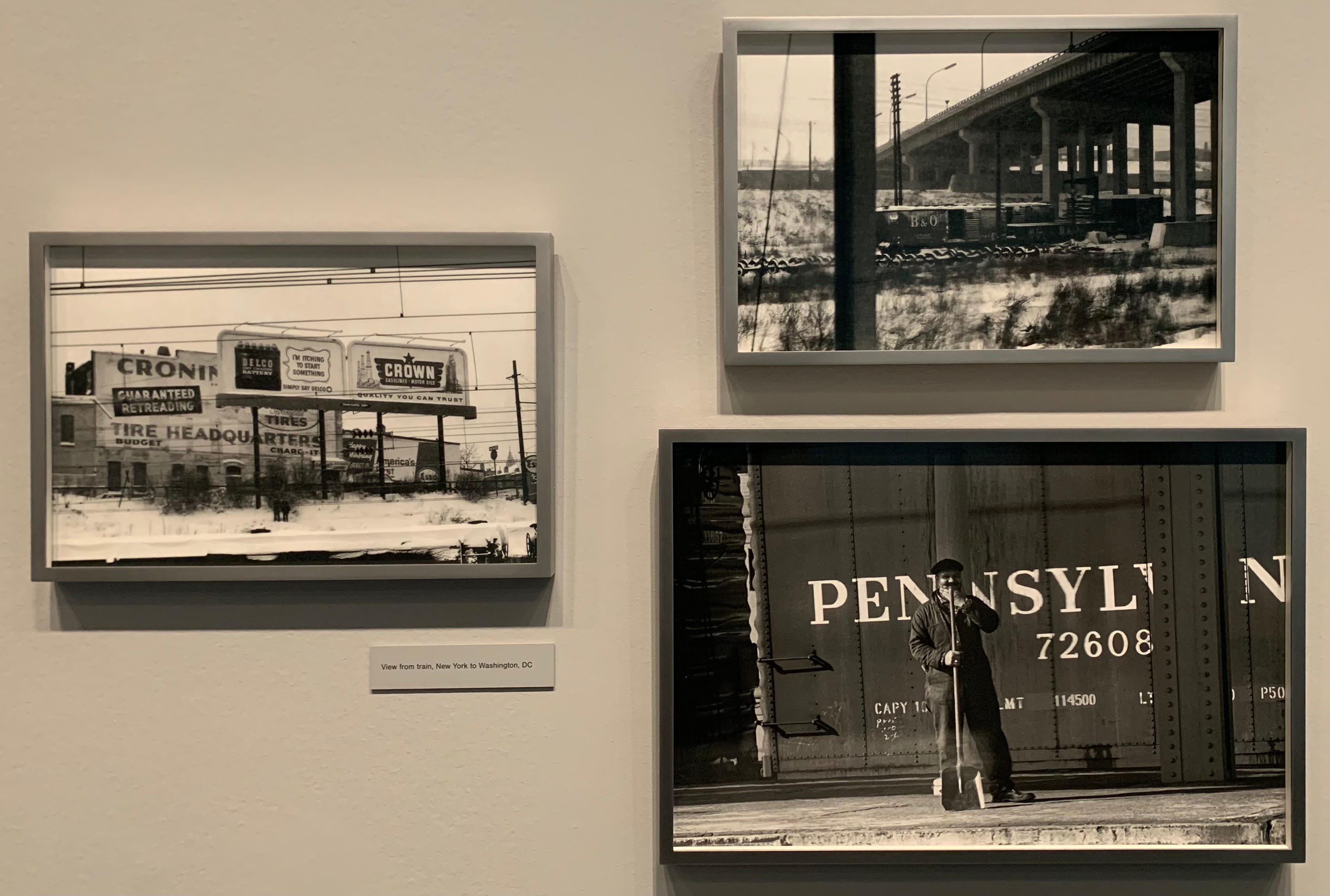
McCartney also used the camera to record the sensory bombardment found in urban settings: the layers of billboards and placards, buildings and cars jumbled together, people coexisting in all kinds of weather. Just as he had done on the Champs Elysées, McCartney captures Columbus Circle from the back of a car, observing a Coca-Cola weather sign, the Hotel Mayflower, and a Heineken beer billboard, accented by the car’s rearview mirror reflecting an unidentifiable something back toward the photographer. After New York, when the Beatles moved on to Washington, DC, McCartney took some exceptional photographs from the train, images of highways and byways that would have made Walker Evans proud. Of the man in front of the Pennsylvania Railroad car (bottom right below), McCartney said “I was always imaging the lives of people I did not know, like that man in front of the train yard, whose story I will never know.”
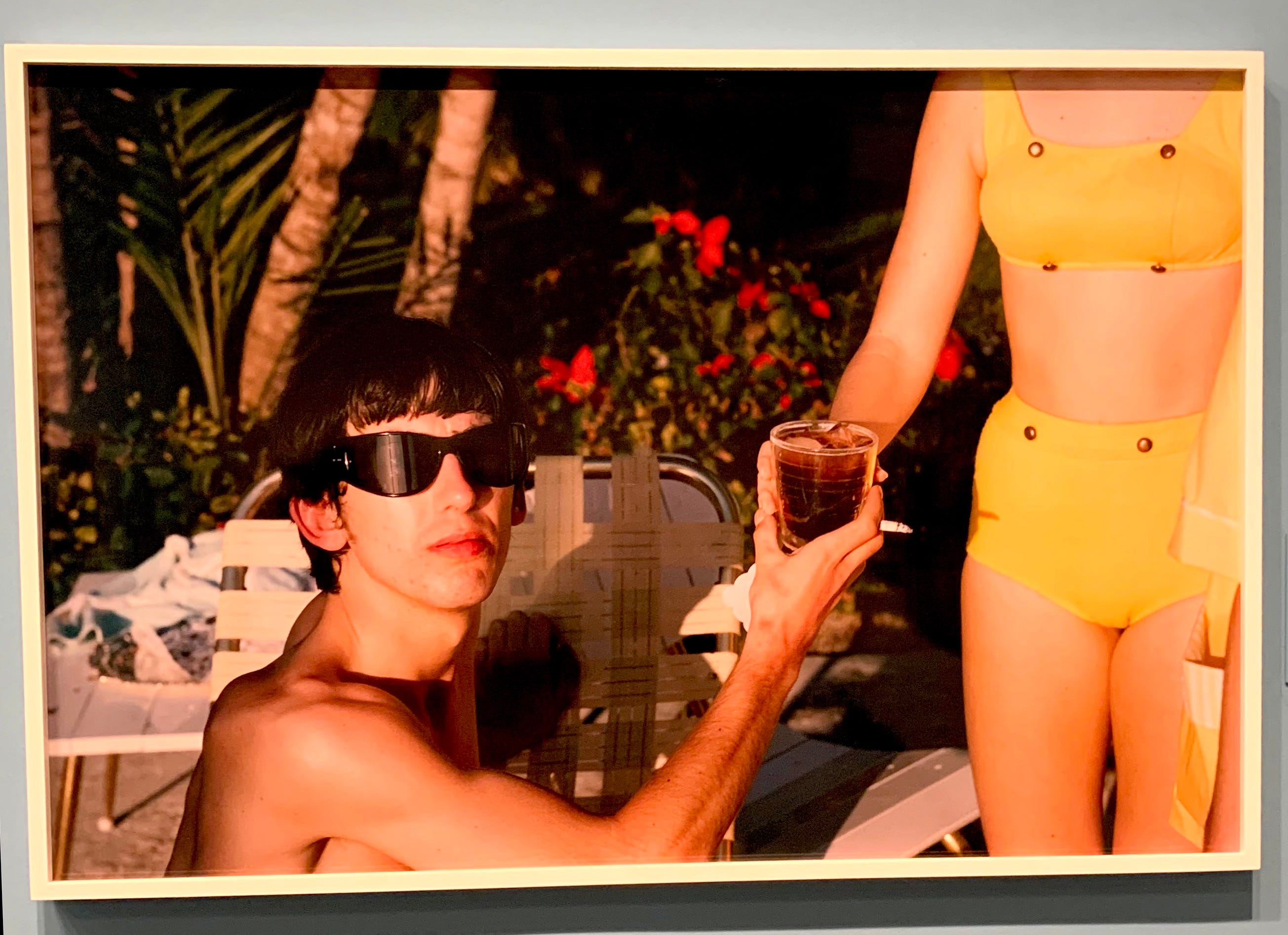
After finishing in Washington, the Beatles went on to Miami Beach where they were scheduled to appear on an Ed Sullivan show shot at the Deauville Beach Club. (It was a sign of the times that actress-dancer Mitzi Gaynor received top billing, although Sullivan predicted that the pop group would one day be as big as Elvis.) McCartney’s photos from the time are, appropriately, in color and installed on gallery walls painted swimming pool turquoise. The Fab Four are enjoying some much needed relaxation, boating, swimming, and fishing, an activity that McCartney didn’t care for. They have swapped their suits and ties for swimming togs and Beatles-branded caps. As usual, Lennon looks inscrutable and Starr sensitive and morose. Only George Harrison seems to appreciate the rockstar life—McCartney captured him in sunglasses with cigarette, accepting a drink from a girl in a bright yellow bikini. The saturated colors and surreal cropping make this one of the best images in the exhibition.
Paul took fewer photos as the band began touring in earnest and playing to ever-larger crowds. By 1966, the Beatles were exhausted and unhappy about having their playing drowned out by the roar of their audiences. The 1967 overdose death of their manager Brian Epstein—the only one who could keep the group in line, McCartney said—left the band without someone to navigate personalities and keep track of finances. The next few years were creative but desperate as the band fought to stay afloat financially. The Beatles officially broke up in April 1970—the degree to which Yoko Ono may or may not be responsible is still debated. The Beatles continue, however, to release albums, including most recently, a new Anthology that includes rare takes and remixes, some 191 tracks on 12 LPs along with CDs and digital media.
Beatlemania is alive and well but Eyes of the Storm captures that brief period during which the boys were still largely untried as celebrities and musicians. That one of their own recorded this time with intimate portraits and the unabashed enthusiasm of a tourist—that McCartney’s Pentax was, to quote a song, here, there, and everywhere—is an extraordinary glimpse of lives and times rapidly fading from public memory, no matter how many rare takes and remixes are unearthed from the archives.
Eyes of the Storm is on view at the Frist Museum of Art, Nashville, through 26 January 2026.
Many thanks for reading and for your kind words.